
A small backyard doesn’t have to feel cramped, unfinished, or difficult to maintain. With thoughtful landscaping, even a compact outdoor space can become a comfortable place to relax, entertain friends, enjoy a morning coffee, or spend time with family.
For homeowners in Victoria, BC, making the most of a small backyard comes with a few unique considerations. Our coastal climate brings plenty of rainfall during the cooler months, followed by relatively dry summers. Properties in neighbourhoods such as Oak Bay, Saanich, Fairfield, and Langford may also have limited outdoor space, close neighbouring homes, mature trees, or challenging drainage conditions.
The good news? You don’t need an enormous yard or an unlimited renovation budget to create a beautiful outdoor space.
The best small backyard landscaping ideas focus on making every square foot useful while balancing appearance, privacy, maintenance, and long-term durability.
In this guide, we’ll explore practical landscaping solutions for small backyards in Victoria, including space-saving patios, low-maintenance gardens, privacy improvements, drainage considerations, and budget-friendly upgrades.
Whether you’re starting with an empty backyard or improving an existing landscape, these ideas will help you create an outdoor space that works for your lifestyle.
How Do You Landscape a Small Backyard?
Before choosing plants, installing patio stones, or purchasing outdoor furniture, it’s important to understand how you want to use your backyard.
A successful small backyard design isn’t about fitting as many features as possible into a limited area. It’s about choosing the right features and arranging them thoughtfully.
Start by asking yourself:
- Do I want a peaceful outdoor sitting area?
- Do I need space for children or pets?
- Would I prefer a garden instead of a lawn?
- Is privacy from neighbouring properties important?
- How much time can I spend on maintenance?
- Does my backyard receive full sun, partial shade, or mostly shade?
- Do I have issues with standing water or muddy ground?
Your answers will help determine the layout, materials, and planting choices that make sense for your property.
A practical starting point: Measure your backyard and draw a simple layout showing doors, fences, existing trees, drainage areas, and sunlight patterns. Then identify one primary use for the space before adding secondary features.
For example, if you have a compact backyard behind a townhouse in Langford, a small paver patio, narrow planting beds, and privacy screening may offer more everyday value than trying to squeeze in a large lawn, garden shed, and multiple seating areas.
12 Small Backyard Landscaping Ideas That Work in Victoria, BC
1. Create a Compact Patio for Outdoor Living
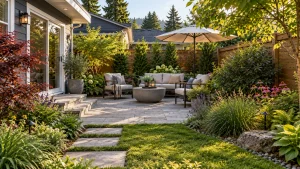
A small patio is one of the most practical improvements you can make to a compact backyard.
Instead of maintaining an oversized lawn that you rarely use, you can dedicate part of your yard to a comfortable outdoor seating area.
A thoughtfully designed patio provides space for:
- A small dining table
- Two or four outdoor chairs
- A compact barbecue
- Container plants
- Outdoor lighting
- A reading or relaxation corner
Best design approach: Choose furniture and patio dimensions together. Measure how much room you’ll need to pull out chairs, walk around the table, and access the garden.
For smaller spaces, simple rectangular or square patios often make better use of available room than complicated layouts with multiple curves.
Which patio materials work well in Victoria?
Concrete pavers are a versatile option because they come in various sizes, textures, and finishes.
Natural stone can create a timeless West Coast appearance, while gravel may be suitable for a simpler, lower-cost seating area if the base is properly prepared.
Victoria’s wet seasons make drainage and slip resistance especially important. A patio should have a stable foundation, appropriate slope, and a surface suitable for outdoor use throughout the year.
If you’re considering connecting a patio to a garden entrance or side yard, our guide to walkway installation in Victoria, BC explains how suitable materials and installation techniques can improve outdoor accessibility and appearance.
2. Use Vertical Gardening to Save Space
When your backyard has limited ground space, think vertically.
Vertical gardening allows you to introduce greenery without occupying large sections of your lawn or patio.
You can use:
- Wall-mounted planters
- Raised narrow planter boxes
- Trellises for climbing plants
- Hanging baskets
- Tiered herb planters
- Climbing plants along suitable supports
For example, a narrow planting bed beside a fence can support a trellis with carefully selected climbers, creating a green backdrop for your outdoor sitting area.
Vertical planters are particularly useful for townhouse gardens and smaller urban properties where every square foot matters.
Victoria landscaping tip: Choose plants based on the actual sunlight and wind exposure of the location. South-facing walls can become hot and dry in summer, while shaded north-facing fences may retain moisture for much longer.
Avoid vigorous climbing species that may damage fences, spread into neighbouring properties, or become difficult to control.
3. Choose Low-Maintenance Plants Suited to Victoria’s Climate
One of the best small backyard landscaping ideas is to choose plants that fit your local growing conditions.
Victoria’s mild coastal climate supports a wide variety of attractive landscaping plants, but not every species performs equally well in every backyard.
The right selection depends on sunlight, soil conditions, drainage, and available growing space.
Consider plants such as:
| Plant | Suitable Conditions | Landscaping Benefits |
| Oregon grape | Partial shade to sun, depending on species and site | Evergreen foliage, seasonal flowers and berries |
| Sword fern | Shaded to partially shaded areas | Lush greenery and woodland character |
| Salal | Partial shade and suitable well-drained soils | Evergreen ground cover and natural screening |
| Kinnikinnick | Sunny, well-drained locations | Low-growing native ground cover |
| Red-flowering currant | Sunny to partially shaded positions | Spring flowers and wildlife value |
| Douglas aster | Sunny locations | Late-season colour and pollinator support |
Not all of these plants are suitable for every small garden. Some shrubs require significant space at maturity, while certain ground covers need particular drainage conditions.
Always check mature plant dimensions before installation.
For homeowners who want a natural West Coast appearance, native and climate-adapted plants can be particularly rewarding.
Once established in suitable conditions, many require less supplemental watering and provide habitat for local wildlife.
How to keep a small garden easy to maintain
Rather than filling every available space with different plants, use a limited selection arranged in repeated groups.
For example, a shaded corner could combine sword ferns, a suitable evergreen ground cover, and a small feature shrub.
This creates a more cohesive appearance while simplifying maintenance.
A layer of appropriate organic mulch can also help reduce weeds, conserve moisture, and give planting beds a clean finish.
4. Create Privacy Without Making the Yard Feel Smaller
Privacy is a common challenge for homeowners with small backyards.
Townhouses, duplexes, and homes with neighbouring balconies or windows can make outdoor areas feel exposed.
Fortunately, you don’t always need a tall, solid fence to create a more private space.
Consider these privacy landscaping ideas:
Decorative privacy screens: A wood or metal screen can provide targeted privacy around a seating area without enclosing the entire yard.
Narrow planting beds: Carefully selected upright shrubs can soften fence lines while creating natural separation.
Pergolas: A properly designed pergola can visually define a seating area and support suitable overhead screening or shade elements.
Raised planters: Taller planters can add greenery and partial screening where planting directly into the ground isn’t practical.
Layered landscaping: Combining plants of different heights can provide a softer and more natural appearance than one continuous hedge.
For small Victoria backyards, targeted screening is often more effective than surrounding the entire property with large, dense shrubs.
Before installing fencing or permanent structures, check local municipal requirements and any applicable strata bylaws.
5. Replace Unused Lawn With Functional Landscaping
A traditional lawn can look attractive, but it isn’t always the best use of a small backyard.
If most of your grass is rarely used, replacing a portion with a patio, planting beds, or a garden pathway may create a more practical outdoor space.
For example, instead of maintaining a narrow strip of lawn between a fence and patio, you could install:
- A low-growing planting bed
- Decorative gravel with suitable edging
- Native ground cover
- Stepping stones
- A compact herb garden
This can reduce mowing requirements and make awkward spaces easier to maintain.
However, if you have children or pets, keeping a modest open lawn may still be the best option.
The goal isn’t necessarily to eliminate grass. It’s to retain only as much as your household actually needs.
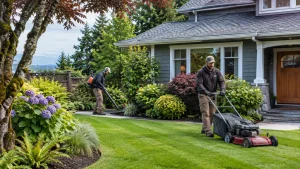
If you decide to keep a small lawn, proper seasonal care remains important. Our lawn maintenance checklist for Victoria homeowners provides guidance on maintaining healthy grass throughout the year.
6. Add Stepping Stone Pathways
Pathways can make a small backyard feel more organized and visually appealing.
They guide movement through the garden while protecting planting areas from unnecessary foot traffic.
Stepping stones are particularly useful when connecting:
- A back door to a patio
- A seating area to a garden bed
- A side gate to the backyard
- A patio to a small shed or storage area
For a natural West Coast style, consider stone or concrete stepping slabs surrounded by gravel or appropriate low-growing ground cover.
How can pathways make a small yard look bigger?
A well-positioned pathway can draw the eye toward a focal point at the far end of the garden.
This gives the space a sense of direction and depth.
For narrow backyards, avoid adding unnecessarily wide paths that consume valuable usable space.
Choose dimensions that provide comfortable access while leaving enough room for plants and outdoor activities.
A pathway also needs a stable base and appropriate drainage to reduce shifting and puddling during Victoria’s rainy months.
7. Add Landscape Lighting for Evening Use
Outdoor lighting is a relatively small addition that can make a noticeable difference to your backyard.
It improves visibility, highlights landscaping features, and makes outdoor seating areas more inviting after sunset.
For small backyards, consider:
- Low-voltage pathway lights
- Warm lighting around a patio
- Subtle lighting beneath steps
- Accent lights for feature trees
- Weather-rated string lights around seating areas
The key is restraint.
Too many bright lights can make a compact space feel cluttered and uncomfortable, especially when neighbouring homes are close.
Choose warm, downward-directed lighting where practical, and avoid directing light into adjacent properties.
Practical tip: Use a few carefully positioned fixtures instead of illuminating every corner of the backyard.
Any electrical installation should comply with applicable safety requirements, with qualified professionals used where necessary.
8. Design a Small Backyard for Year-Round Use
Victoria homeowners can often enjoy their outdoor spaces beyond the summer months, especially when the backyard includes sheltered and properly drained areas.
A useful year-round design might feature:
- A stable patio surface
- Weather-resistant furniture
- A compact pergola or covered seating feature
- Evergreen shrubs
- Suitable outdoor lighting
- Well-drained pathways
Evergreen planting can help maintain visual interest during winter when deciduous plants lose their leaves.
For an inviting outdoor space, combine year-round structure with seasonal flowers and foliage.
You don’t need a fully enclosed outdoor room to make your backyard useful in cooler weather.
Sometimes, a well-positioned seating area sheltered from prevailing wind is enough to make a noticeable difference.
9. Build Raised Garden Beds for Small Spaces
Raised garden beds are an excellent choice for homeowners who enjoy growing herbs, vegetables, or ornamental plants.
They offer several practical advantages:
- Better control over soil composition
- Clearly defined planting areas
- Easier access for routine maintenance
- Reduced foot traffic on growing soil
- Opportunities to garden in areas with poor existing soil
In a small backyard, one or two compact raised beds are often more useful than several oversized structures.
Place them where plants will receive suitable sunlight, and make sure you can reach the centre of the bed without stepping onto the soil.
For Victoria homeowners interested in growing vegetables, consider the seasonal sunlight available during spring and summer.
You should also ensure raised beds have adequate drainage and are built from suitable outdoor materials.
Avoid placing tall beds where they block pathways or create unnecessary shade over other planting areas.
10. Make a Small Backyard Look Bigger With Smart Design
A small space can feel more open when the layout is simple, balanced, and uncluttered.
You don’t necessarily need to change the physical size of your backyard to improve how spacious it feels.
Try these design techniques:
Use a limited material palette. Repeating two or three complementary materials can create a more unified appearance than mixing several unrelated finishes.
Choose appropriately sized furniture. Oversized sofas and dining sets can overwhelm compact patios.
Keep sightlines open. Avoid placing tall plants or bulky structures in the middle of the yard if they interrupt the view.
Introduce a focal point. A feature planter, small tree, or attractive seating area can draw attention toward one destination.
Use consistent planting groups. Repeating similar textures and colours creates visual rhythm without making the garden feel busy.
Keep the layout functional. Every feature should have a clear purpose.
For example, a rectangular backyard with a simple patio near the house, a narrow planting border, and a focal-point tree at the far end often feels more organized than a yard filled with disconnected decorative elements.
11. Fix Drainage Problems Before Installing New Features
One of the most important considerations for backyard landscaping in Victoria is drainage.
During the wetter months, poorly drained yards can develop standing water, saturated soil, muddy pathways, and unstable surfaces.
These problems are particularly frustrating in small spaces because even one consistently wet area can affect a large portion of the usable yard.
Before investing in new plants, patio materials, or decorative features, identify how water moves through the property.
Common signs of poor backyard drainage
- Puddles remaining after rainfall
- Persistently muddy areas
- Water collecting near foundations
- Saturated or failing planting beds
- Shifting pavers
- Moss growth accompanied by wet, compacted soil
Moss alone doesn’t prove there is a drainage problem, but it can indicate conditions worth investigating.
What can help improve drainage?
Depending on the site, solutions may include:
- Correcting inappropriate surface grading
- Improving soil conditions
- Installing suitable drainage systems
- Using permeable paving where soil conditions allow
- Redirecting water through an approved drainage solution
- Selecting plants suited to moist locations
Not every backyard needs a French drain or extensive excavation.
In some cases, a simple change to surface grading or soil preparation may be sufficient.
However, persistent standing water near a home should be professionally assessed before major landscaping work begins.
In Greater Victoria, proper drainage planning is especially important when installing patios, retaining walls, and other permanent landscape features.
12. Choose Multi-Functional Landscaping Features
When space is limited, features that serve more than one purpose can provide excellent value.
For example:
Built-in bench seating: Provides seating without requiring several separate chairs and can include storage if appropriately designed.
Raised planter borders: Help organize planting areas while visually defining a patio.
Pergolas: Define outdoor living space and may offer shade or support suitable climbing plants.
Decorative retaining features: Can help manage minor elevation changes while creating defined planting zones, provided structural requirements are addressed.
Compact garden storage: Keeps tools and outdoor supplies organized without taking over the yard.
Instead of purchasing multiple decorative pieces, focus on a smaller number of well-designed, functional elements.
The result is usually a cleaner, more comfortable backyard that feels intentional rather than crowded.
Small Backyard Landscaping Ideas on a Budget
You don’t always need a complete landscape renovation to improve a small backyard.
If your budget is limited, start with upgrades that solve an immediate problem or create the greatest visual improvement.
Budget-Friendly Backyard Improvements
| Improvement | Why It Works | Planning Consideration |
| Refresh mulch | Makes garden beds look tidy | Choose suitable material and depth |
| Add container plants | Introduces colour without major construction | Match plants to light and watering needs |
| Install simple edging | Creates cleaner lawn and bed boundaries | Choose a durable installation |
| Add a gravel seating area | Can be less expensive than elaborate hardscaping | Requires stable base and drainage |
| Prune overgrown shrubs | Reclaims space and improves appearance | Use proper pruning techniques |
| Add a small raised bed | Creates a productive garden feature | Plan for sunlight and access |
| Improve lighting | Makes patios more inviting | Use safe, weather-rated fixtures |
Which improvements should you prioritize?
A good approach is to work in phases.
Phase 1: Clean and organize. Remove unwanted debris, assess unhealthy plants, trim overgrown vegetation, and establish the basic layout.
Phase 2: Fix functional issues. Address drainage, uneven ground, poor access, or damaged surfaces.
Phase 3: Create the main feature. Install a compact patio, pathway, or seating area that supports how you want to use the space.
Phase 4: Add finishing details. Introduce planting, mulch, lighting, and decorative accents.
This approach lets you spread expenses over time without sacrificing the overall design.
However, structural work and drainage should be planned before decorative improvements to avoid paying to redo completed work.
How Much Does Small Backyard Landscaping Cost in Victoria, BC?
The cost of landscaping a small backyard depends on much more than the property’s square footage.
Materials, site accessibility, drainage, excavation requirements, planting selections, and labour all affect the final price.
A simple garden refresh might involve cleanup, planting, edging, and mulch.
A more substantial renovation could include paver installation, grading, irrigation, lighting, fencing, and custom landscape features.
Even a compact backyard can become an expensive project if significant structural work is required.
What affects the price most?
Existing conditions: Removing old patios, overgrown shrubs, or damaged landscape features adds labour and disposal costs.
Access: Narrow side yards and difficult access can increase material handling time.
Materials: Decorative gravel, concrete pavers, natural stone, and custom-built features have different installation costs.
Drainage: Poor soil conditions or water management issues may require preparation before landscaping begins.
Design complexity: Simple layouts generally require less labour than projects involving multiple levels, retaining walls, and detailed hardscaping.
Plant sizes: Smaller nursery plants may cost less initially, while mature specimens provide a more immediate visual impact but can be more expensive.
For a more detailed breakdown, read our guide on how much landscaping costs in Victoria, BC.
The most reliable way to budget for your own backyard is to request a site-specific estimate based on the work you actually need.
Best Small Backyard Landscaping Layouts
If you’re unsure where to start, consider one of these practical layout approaches.
Layout 1: Small Backyard for Relaxing
Best for: Couples, retirees, and homeowners who want a quiet outdoor retreat.
A simple layout could include:
- A compact patio beside the house
- Two comfortable chairs
- A narrow border of evergreen plants
- A feature planter or small ornamental tree
- Subtle landscape lighting
Keep the design uncomplicated and prioritize privacy and comfort.
Layout 2: Family-Friendly Small Backyard
Best for: Families with children or pets.
Consider:
- A modest open lawn or suitable play surface
- Narrow planting beds around the perimeter
- A compact seating area
- Clear walking routes
- Secure boundaries where needed
Choose durable materials and avoid creating unnecessary obstacles in the central play area.
Plant selection should also consider potential toxicity to children and pets.
Layout 3: Low-Maintenance Backyard
Best for: Busy homeowners, rental properties, and people who prefer minimal gardening.
Use:
- A modest paver or gravel seating area
- Climate-appropriate shrubs and perennials
- Mulched planting beds
- A simple irrigation approach
- Limited lawn or suitable ground cover
This type of design reduces routine upkeep, although all landscapes still need periodic attention.
Layout 4: Small Backyard for Entertaining
Best for: Homeowners who enjoy outdoor meals and gatherings.
A functional layout might feature:
- A patio large enough for a small dining set
- Compact barbecue space with safe clearances
- Built-in or space-saving seating
- Warm outdoor lighting
- Planters around the perimeter
Avoid crowding the seating area with too many decorative features.
What Should You Avoid When Landscaping a Small Backyard?
Even good landscaping ideas can become problematic when they aren’t suited to the available space.
Here are some common mistakes to avoid.
Choosing Plants That Grow Too Large
A small shrub may look perfectly sized at the nursery but become too wide for a narrow planting bed.
Always consider mature width and height, not just how a plant looks when purchased.
Ignoring Drainage
Installing expensive pavers or garden beds over poorly drained ground can create long-term maintenance problems.
Address water movement before making major landscape improvements.
Overcrowding the Design
Trying to include a large dining area, lawn, pond, shed, vegetable garden, and multiple pathways in a compact yard may reduce overall usability.
Prioritize what matters most.
Using Too Many Different Materials
Mixing numerous colours, paving styles, and decorative features can make a small backyard feel disconnected.
A consistent design palette usually creates a more polished appearance.
Forgetting About Maintenance
Every landscape requires some level of care.
Choose materials and planting combinations based on how much maintenance you’re realistically prepared to manage.
How to Plan Your Small Backyard Landscaping Project
Once you’ve identified the ideas you like, use a simple planning process to turn them into a practical project.
Step 1: Measure Your Space
Record the approximate dimensions of the yard, including pathways, existing structures, trees, and boundaries.
Step 2: Evaluate Site Conditions
Observe sunlight, shade, drainage, soil conditions, slopes, and access points.
Step 3: Identify Your Priorities
Choose the two or three improvements that will make the biggest difference to how you use the backyard.
Step 4: Establish Your Budget
Separate essential work, such as drainage correction and site preparation, from optional decorative features.
Step 5: Choose Climate-Appropriate Materials
Select plants, paving, edging, and landscape materials suited to local conditions and your maintenance preferences.
Step 6: Plan Installation in the Correct Order
Complete necessary grading, drainage, and foundational work before installing finishing materials and plants.
Step 7: Plan for Ongoing Care
Think about watering, pruning, weed management, and seasonal cleanup from the beginning.
For homeowners ready to make improvements, explore Hohl Landscape’s landscape projects and outdoor enhancement services to see the types of features that can make residential outdoor spaces more functional and attractive.
Frequently Asked Questions About Small Backyard Landscaping
What is the best way to landscape a small backyard?
The best approach is to prioritize one main use for the space, such as relaxing, entertaining, or gardening. Combine a practical layout with appropriately sized plants, a functional patio or pathway, and sufficient open space. Avoid overcrowding the yard with unnecessary features.
How can I make a small backyard look bigger?
Use consistent paving materials, maintain clear sightlines, select appropriately sized furniture, and place larger plants toward the perimeter. A clear focal point and an uncluttered layout can help the backyard feel more spacious.
What are the cheapest small backyard landscaping ideas?
Affordable improvements may include refreshing mulch, pruning overgrown plants, adding container gardens, improving lawn edging, and installing a simple gravel seating area. Prioritize essential repairs before spending money on decorative elements.
What are the best low-maintenance landscaping ideas for a small backyard?
Choose plants suited to your soil and sunlight conditions, minimize unnecessary lawn, use mulch in planting beds, and create simple, accessible layouts. Native and climate-adapted plants can help reduce maintenance once established.
What plants are good for small backyards in Victoria, BC?
Depending on site conditions, options may include sword ferns, salal, kinnikinnick, compact forms of Oregon grape, and suitable flowering perennials. Select plants according to mature size, soil drainage, sunlight, and watering requirements rather than appearance alone.
How do I create privacy in a small backyard?
Targeted privacy screens, narrow planting beds, appropriately sized shrubs, and strategically placed pergolas can improve privacy without overwhelming a compact yard. Check local bylaws and property restrictions before installing permanent structures.
Can I have a patio in a very small backyard?
Yes. A compact patio can provide a practical outdoor living area even when space is limited. Choose appropriately sized furniture and leave enough room for safe, comfortable movement. Proper base preparation and drainage are essential.
How do I prevent my small backyard from becoming muddy during Victoria’s rainy season?
Start by identifying where water collects and whether surface grading, compacted soil, or drainage problems are contributing. Depending on the cause, solutions may involve soil improvement, suitable paving, grading corrections, or professional drainage work.
How much does it cost to landscape a small backyard in Victoria, BC?
Costs vary significantly depending on the design, site conditions, and materials. Simple planting and garden improvements generally cost less than projects involving new patios, retaining walls, drainage systems, and substantial excavation. A property-specific quote is the best way to determine an accurate budget.
When is the best time to landscape a backyard in Victoria, BC?
Planning can happen throughout the year. Fall is often suitable for establishing many plants because cooler temperatures and seasonal moisture support root development. Hardscape installation depends on weather, soil conditions, contractor availability, and project requirements.
Do I need a permit to landscape my backyard in Victoria?
Basic planting and routine garden improvements generally don’t require a building permit. However, permanent structures, certain fences or retaining walls, significant grading, and drainage changes may require municipal review or approval. Requirements vary by municipality and property, so confirm before construction.
Final Thoughts: Make Your Small Backyard Work for You
A beautiful backyard doesn’t have to be large.
With the right planning, even a compact outdoor space can provide privacy, comfort, functionality, and year-round visual appeal.
The most effective small backyard landscaping ideas are those that reflect how you actually want to use the space.
For some homeowners, that means a simple patio surrounded by greenery. For others, it means a low-maintenance garden, a family-friendly lawn, or a private outdoor retreat.
In Victoria, BC, successful landscaping also means considering local conditions such as winter rainfall, summer watering requirements, drainage, and suitable plant selection.
By combining practical design with durable materials and thoughtful planting, you can create an outdoor space that looks great and works well for years to come.
Ready to Transform Your Small Backyard in Victoria, BC?
At Hohl Landscape, we help Greater Victoria homeowners improve their outdoor spaces through professional landscape projects, installations, and ongoing maintenance.
Whether you’re considering a new patio, garden beds, pathways, or a complete backyard refresh, our team can help you explore solutions suited to your property and priorities.
Contact Hohl Landscape to discuss your project and request a personalized estimate.
Proudly serving Victoria, Oak Bay, Saanich, Langford, Sidney, and surrounding Greater Victoria communities.


2 thoughts on “Small Backyard Landscaping Ideas That Work in Victoria, BC”
Pingback: Landscaping Trends Victoria BC: Modern Design Ideas
Pingback: Lawn Problems in Victoria BC: Causes & Easy Fixes